
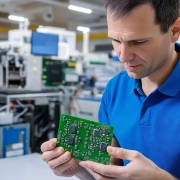
In industrial environments, PCB and PCBA reliability is critical. From automation systems to medical equipment, performance failure is not acceptable.

Electrical Testing

Each PCBA undergoes electrical testing to verify:

  • Continuity
  • Insulation resistance
  • Signal functionality
  • Voltage stability

Functional Testing

Complete assemblies are tested under real operating conditions to simulate end-use scenarios.

Environmental Stress Testing

Industrial PCBs often undergo:

  • High and low temperature cycling
  • Vibration testing
  • Humidity resistance testing

Traceability & Process Control

Modern PCB manufacturers implement:

  • Lot tracking systems
  • Component traceability
  • ISO 9001 quality management
  • RoHS compliance

Applications of High-Quality PCB & PCBA

  • Industrial automation systems
  • Smart IoT devices
  • Communication equipment
  • Medical devices
  • Consumer electronics

Reliable PCB and PCBA manufacturing ensures stable performance, safety, and long product lifecycle.
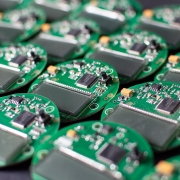
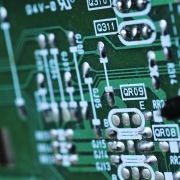
While PCBs provide the base structure, Printed Circuit Board Assembly (PCBA) is where the board becomes functional.

PCBA involves mounting electronic components onto the PCB using advanced assembly techniques.

Surface Mount Technology (SMT)

SMT is widely used for high-density electronic assemblies. Components are placed directly onto the PCB surface using automated pick-and-place machines.

Advantages include:

  • Higher production speed
  • Compact circuit design
  • Reduced manufacturing cost
  • Improved reliability

Through-Hole Assembly

For components requiring stronger mechanical stability, through-hole technology is used. Leads are inserted into drilled holes and soldered on the opposite side.

Reflow Soldering

Solder paste is applied to pads, and the board passes through a controlled reflow oven to permanently bond components.

Precise temperature control ensures:

  • Strong solder joints
  • Reduced voids
  • Minimal thermal stress

Automated Optical Inspection (AOI)

AOI systems detect:

  • Misaligned components
  • Solder bridges
  • Missing parts
  • Polarity errors

Quality inspection ensures compliance with IPC-A-610 standards.

Printed Circuit Boards (PCBs) form the structural and electrical foundation of modern electronic devices. From smart home systems to industrial control units, high-quality PCB manufacturing ensures stable circuit performance and long-term reliability.

What Is a PCB?

A Printed Circuit Board (PCB) is a flat board made of insulating material with conductive copper traces that connect electronic components. The PCB provides mechanical support and electrical pathways for electronic circuits.

Key PCB Manufacturing Steps

1. PCB Design & Layout

The process begins with schematic design and PCB layout using CAD software. Engineers define trace width, component placement, and signal routing to ensure electrical performance and heat management.

2. Material Selection

Common materials include FR-4, aluminum substrate, and high-frequency laminates. Material selection impacts durability, signal integrity, and thermal performance.

3. Copper Pattern Etching

Copper layers are etched to create conductive pathways. Precision at this stage determines electrical stability.

4. Drilling & Plating

Via holes are drilled and plated to create inter-layer electrical connections in multilayer PCBs.

5. Solder Mask & Silkscreen

A solder mask protects copper traces from oxidation and short circuits. Silkscreen markings identify components and circuit areas.

Why PCB Quality Matters

High-quality PCB manufacturing ensures:

Signal integrity

Thermal stability

Long service life

Reduced failure rate

Compliance with IPC standards

Modern electronics demand precision-engineered PCBs capable of handling high-density and high-speed circuits.